Websites for builders, where the decision takes months and the gallery does the selling.
Nothing to pay for the build. Once the site is live and tracking is verified, $297 a month including GST for 12 months, which totals $3,564, and no invoice before launch.
What does a builder's website need that a trade website does not?
A builder's website is read for months before anybody rings.
A blocked drain gets a website 40 seconds and a phone call. A rear extension gets one opened in June, opened again in August with a partner sitting alongside, and opened a third time in November once the bank has said yes. The same household will visit 6 or 8 times, from a phone at lunch, a laptop at night, and a tablet on the couch while they hold you up against 2 other builders.
That arc changes what the pages have to survive. Copy that only sells falls apart on the third read, because by then the reader has stopped being impressed and started checking for consistency. Does the project in the hero photograph appear anywhere else with a scope attached? Does the inclusions list say the same thing on the extensions page as it does on the custom homes page? Is the entity name at the bottom of the page the same one on the contract sample? Contradictions that nobody notices in a 40-second visit are obvious by visit 4.
It also changes what a good week looks like. The enquiry does not arrive on the first visit and nothing is broken when it does not. On the early visits the site is trying to stay on the shortlist, which means giving a returning reader something they have not already seen: a project added since last time, a cost page written like an adult wrote it, a plain description of how a variation gets priced mid-build. Most builder sites are generous to a first-time visitor and offer a fourth-time visitor nothing at all, which is precisely backwards for a purchase this size.
So I build for the long read. Deep pages that reward a second pass, a projects section that keeps growing, and a written account of how your jobs run from first sketch to handover, so a couple can go through it together at 9pm with you nowhere in the room.
Almost nobody types the word builder into Google.
Homeowners rarely type the word builder. They type the thing they want built: home extension, knockdown rebuild, second storey addition, granny flat, bathroom renovation, kitchen renovation, heritage restoration, shed conversion. Each of those is a different budget, a different approval path and frequently a different person. The extension searcher has a growing family and an existing mortgage. The knockdown rebuild searcher has already decided the current house is not worth saving. The bathroom searcher may be quietly testing you for a much larger job next year.
One Services page listing 9 offerings ranks for none of them. It has a single title tag, a single H1 and a couple of sentences per service, and it is competing with pages built entirely around one build type. Split them and each page gets its own title, its own selection of finished work, its own cost commentary and its own list of the worries that particular buyer arrives with.
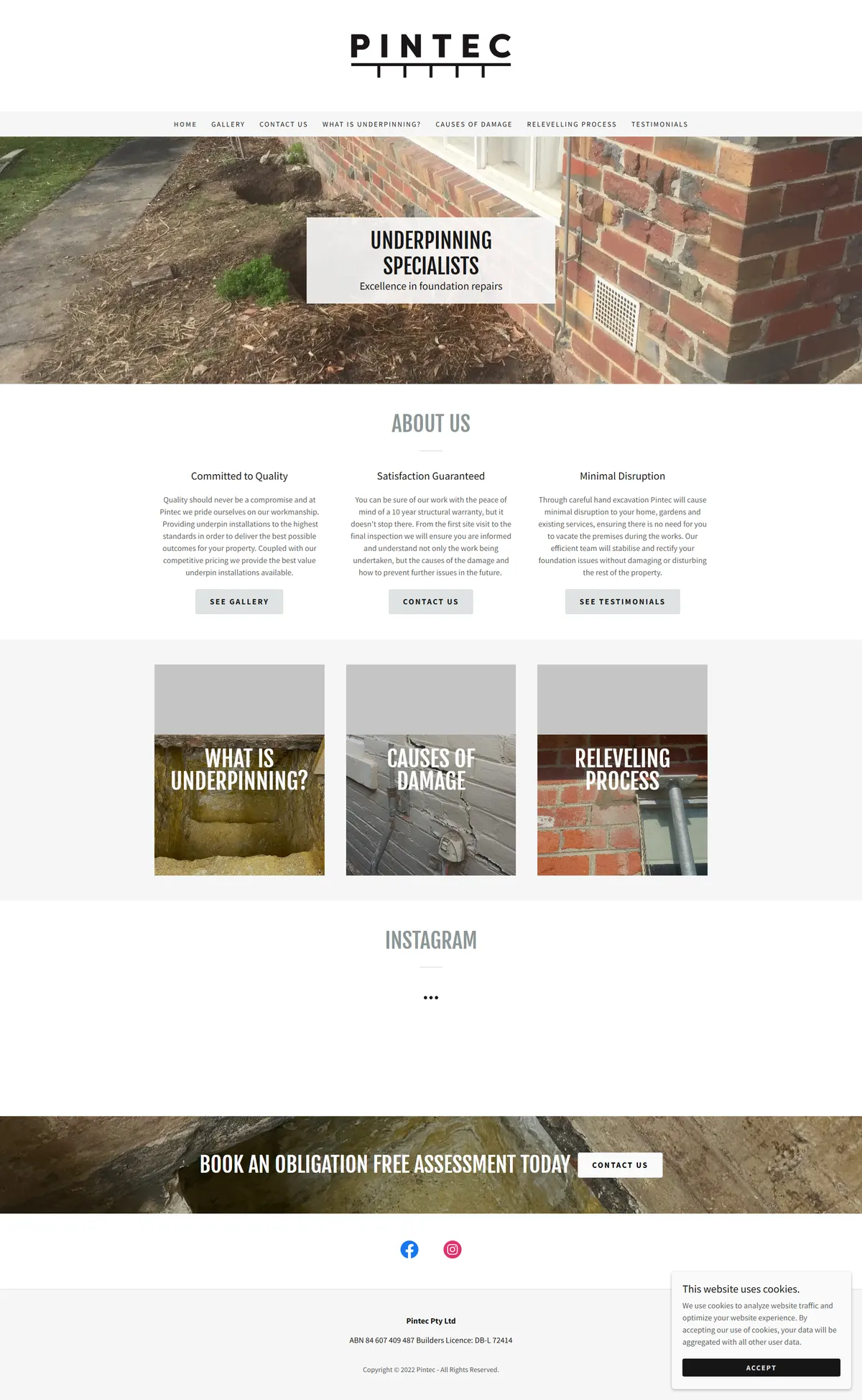
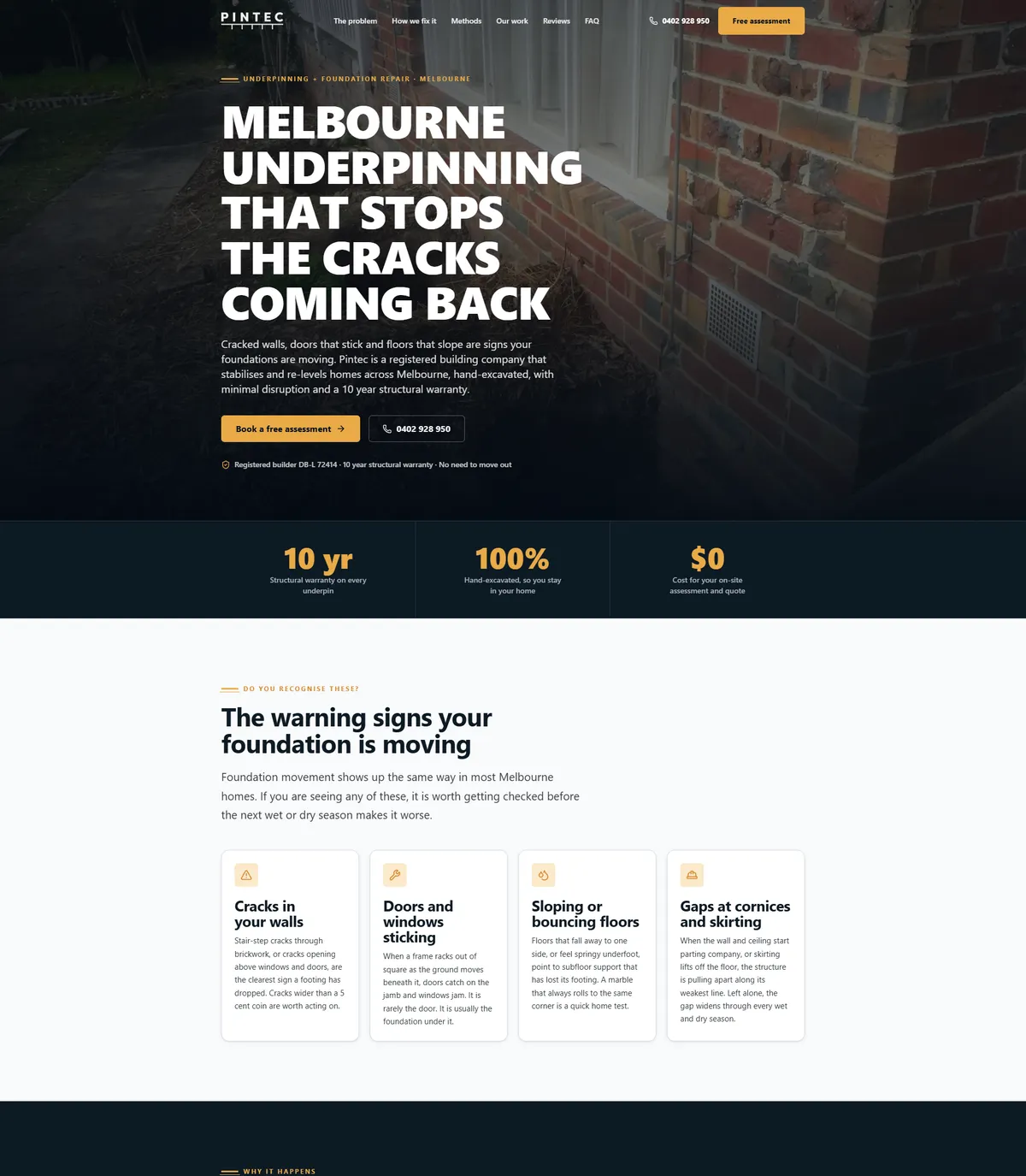
That is the architecture behind Adelaide's Bathroom Network: service-tier pages for full renovations, ensuites, small bathrooms and accessibility work instead of one page trying to speak to all 4 buyers at once. It began ranking inside 8 weeks of going live. Underpinning Sydney was built the same way, with separate pages for residential underpinning, commercial work, screw piling and resin injection, and it reached the top 3 for its main search term.
The other half of the exercise is exclusion. If you do not take bathroom-only jobs, owner-builder consulting or insurance repair work, do not run a page that implies otherwise. Those enquiries will arrive, and every one of them costs you an evening to decline politely.
Both builds are written up in full: Adelaide's Bathroom Network and Underpinning Sydney.
The gallery is the argument, and most galleries throw it away.
Ask a builder what wins work and the answer is the work. Then look at how the work is presented on most builder websites: 40 untitled photographs in a lightbox, uploaded in whatever order they came off a phone, with no suburb, no scope and no way for a reader to tell a modest rear extension from a full custom home.
A project somebody can name beats 10 they cannot. That means a page per build rather than a tile per build, and it means writing the parts a photograph cannot show. Read that way, the gallery answers the question the reader is actually holding, which is never can you build, and always have you built mine.
What a project page carries
- The suburb, and what was on the site before the job started
- What the client asked for, in their words rather than yours
- The scope of works in plain terms, including what was left out
- Materials and finishes, named, because people search by them
- The awkward part of the site (a steep fall, a heritage overlay, a shared boundary) and how it was solved
- Photographs in sequence, from demolition through frame to handover
There is a search consequence as well. A named project page can rank for the suburb alongside the build type, and it collects links honestly, because the architect, the joiner, the engineer and the tile supplier who worked on that job all have a reason to point at it. A photograph inside a slider gives them nothing to link to.
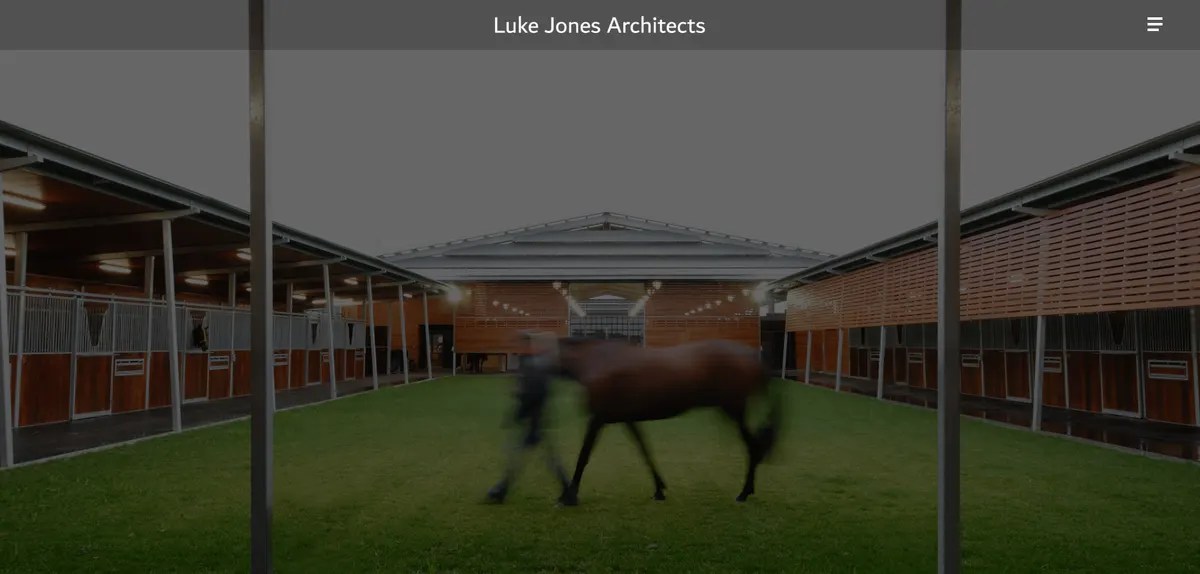
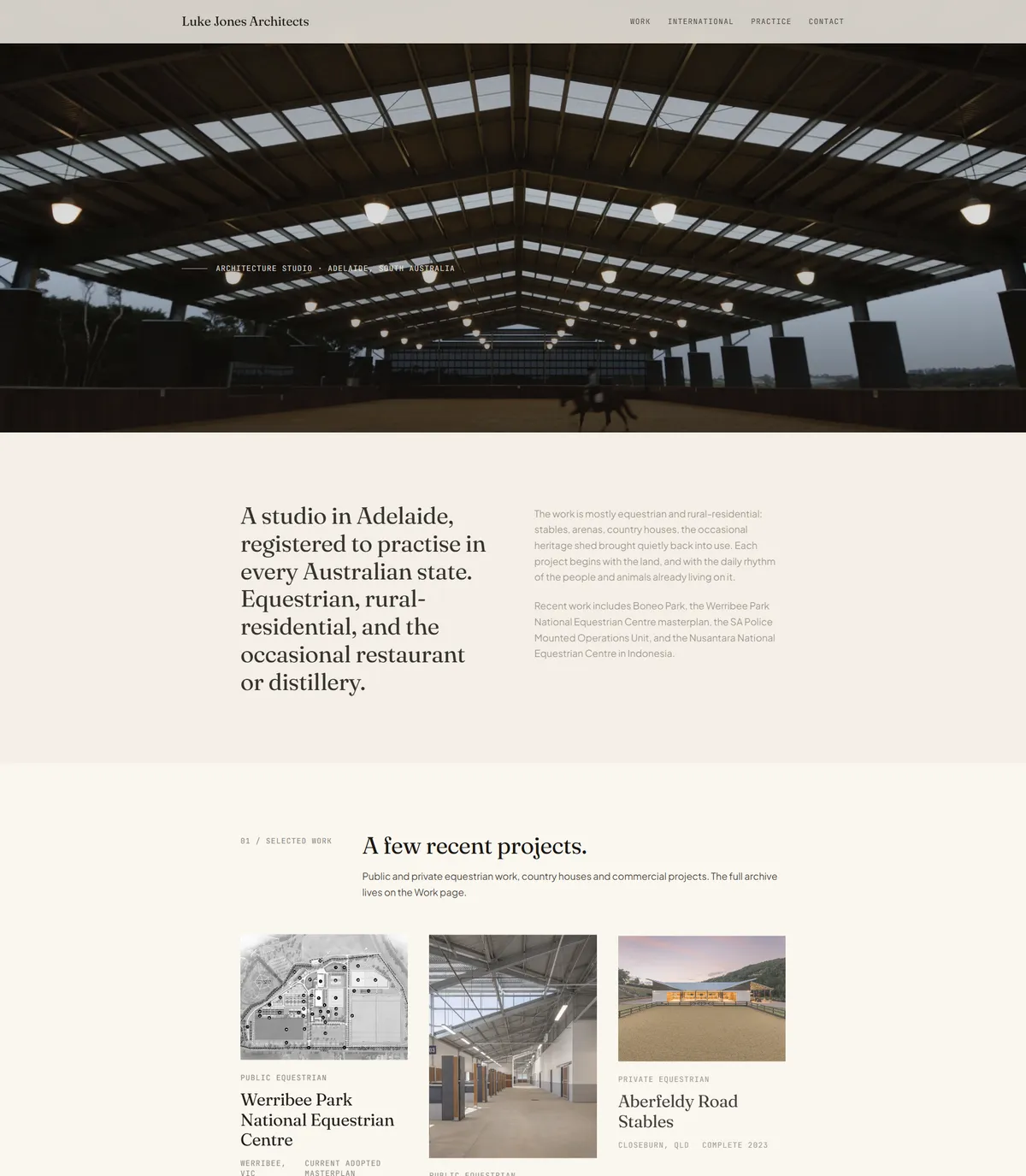
Weight matters here more than on any other kind of site I build. Builder galleries are enormous, and a gallery that takes several seconds to appear on a phone loses the person scrolling in bed. Luke Jones Architects is the same problem in its purest form, a practice where the photography is the entire argument, so that site is built to carry images at full width without dragging its feet.
Licence checking is a step in the buying process, not a footer detail.
Somewhere between the shortlist and the contract, a homeowner types your business name next to the word licence, or opens the public register their state keeps. In South Australia that register is run by Consumer and Business Services, in New South Wales by Fair Trading, in Victoria by the Victorian Building Authority, and in Queensland by the QBCC. Every one of them asks for a name or a number. If the reader cannot find either on your website, they either give up on you or they search the wrong entity and reach a conclusion you never earned.
So the licence number belongs on the page as selectable text, not baked into a logo image where nobody can copy it. The trading name on the site has to match the name the licence is registered to, exactly. Where the company holding the licence is not the name painted on the ute, say so plainly on the about page, because a mismatch a stranger discovers on a government register reads far worse than an explanation you offered first.
Insurance sits in the same part of the buyer's process. Public liability, and the statutory home warranty or building indemnity cover that applies to residential work in your state (it goes by a different name in nearly every state), are things a careful client raises at quote stage with some embarrassment. I am not insurers and I will not tell you what cover your contracts require, which is a question for your broker, but whatever you do carry should be findable in writing on the site rather than produced on request.
Association memberships belong here too, with the membership number rather than just the badge. None of this is decoration. It is the checklist a nervous person works through before letting a stranger take a wall out of their house, and having it on the page means you pass the check without ever knowing it happened.
Quoting a build is a conversation, so the form has to do the qualifying.
Get a free quote is the wrong button on a builder's website. Nobody prices a knockdown rebuild off a web form and both sides know it. What the enquiry really begins is a slow, staged conversation: a look at whatever drawings exist, a walk of the site, a preliminary estimate, sometimes a paid design and construct agreement long before a fixed price is written.
That means the form is not there to capture a job. It is there to sort a stranger into a stage, so the reply you write is the right one. The fields that earn their place are few.
The 5 fields worth asking for
- Project type, picked from your actual build types
- Stage: an idea, a sketch, plans drawn, approval granted, ready to start
- Suburb, so you know whether it is a site you would drive to
- Budget range, chosen from bands rather than typed into an empty box
- When they want work to start, which is often the most revealing answer
The difference this makes is bigger than it sounds. An enquiry that says extension, plans drawn, Prospect, ready after Christmas, with a budget band attached, tells you in seconds whether to make room this week. An enquiry that says hi, can I get a quote, costs you an evening to find out the same thing.
It also keeps the reader who is not ready yet. Somebody 8 months out will not hand over a phone number to a form promising an immediate callback, but they will tell you what they are planning if the page states what happens next, in what order, how long each stage takes and what any of it costs. Publish that sequence. It is the single most reassuring thing on a builder's website, and almost nobody writes it down.
The trade-wide version of this argument, covering urgency, service areas and call tracking, sits on the websites for tradies page.
The closest live sites I can hand you, and what they prove.
Read this one honestly: none of the 3 sites below is a residential builder. They are the construction-adjacent builds running on this offer today, an architecture practice whose photography carries the whole argument, a plumber who takes bathroom renovation work, and a landscape designer selling a considered purchase off a gallery. Open them and read the title tag under each card.
Where the builder evidence actually sits.
The construction-side record on this offer is 2 builds deep, and I would rather say that than pad a portfolio. Adelaide's Bathroom Network began ranking inside 8 weeks of launch. Underpinning Sydney reached the top 3 for its main search term in a market held by national firms and directories. That is the whole list, and both are written up with the live address attached.
Read them here: bathroom renovations and underpinning. For the wider record, Loudachris Digital Marketing holds 160+ 5-star Google reviews across its client work, which are reviews of that business rather than of this offer.
If your website has not produced a lead from SEO within the first 90 days, you stop paying me until it does. There is no refund, and I do not promise rankings.
- I do not promise a position on Google, and I do not promise one by a certain date.
- I do not offer refunds. The remedy is that you stop paying until the site produces a lead.
- I do not guarantee how many leads you get, only that the first one arrives before you pay again.
Not just prettier. Built to be found.
Every rebuild leads with the client's main commercial keyword in the page title and a single clean H1. Design that looks the part, architecture that ranks on Google.
1 plan. $0 to start. Yours to keep.
The $297/month subscription is the all-inclusive monthly retainer that keeps your site working long after the build is done. Hosting, backups, and any website changes you need (swap an image, edit some copy, add a page), with a direct line to Chris. First payment only triggers once the site is live and tracking is confirmed.
The site, the domain and the code belong to you from day 1. After the 12th payment your website is paid off, and you choose: keep your plan at $297 a month for website changes and a quarterly SEO review, or cancel, and I'll either keep hosting your site for free or hand you the full code to host wherever you like.
- Free website, built in 5 working days
- No leads from SEO in your first 90 days and you stop paying until one arrives.
- Built SEO-ready: keyword-aligned pages, schema, fast hosting
- Hosting served from Sydney, with daily backups
- Ongoing website changes: swap an image, edit copy, add a page
- Client portal: request changes, made within 3 business days
- A direct line to Chris and a single point of contact
- Paid for in full by 12 payments, then it's yours to keep
- Google Ads management available as an add-on
If you are still deciding how to get the site built.
What builders and renovators ask before they send the plans.
Both, and they feed each other. A referred client still searches your name before they ring, and what they find decides whether the referral survives contact. Search also reaches the extension and rebuild buyers who have nobody to ask.
Its own page, at least for the build types you want more of. A named project carrying the suburb, the scope and the sequence of photos can rank on its own and can be sent to a hesitant client. A tile in a slider does neither.
No, and be careful of anyone offering it. Hundreds of near-identical suburb pages get treated as scaled content and quietly ignored. Build pages where you have genuinely built, and let the project pages carry the suburb names naturally.
No. Progress shots often outperform the styled final set, because a slab pour, a frame going up or a wall opened for a steel beam shows competence in a way a finished lounge room cannot. Send what you have, and keep shooting on the next job.
You need a cost page, not a price list. Explain what moves the number: scope, site access, ground conditions, level of finish, approvals. Then explain how a preliminary estimate becomes a fixed price and how a variation gets priced mid-build. That answers the question without quoting a job you have not seen.
As selectable text in the footer and on the about page, beside the exact entity name it is registered to, so anyone can copy it straight into the state register. Inside a logo image it cannot be copied, read or verified.
I will not put a date on it, because nobody honestly can. What I can name is Adelaide's Bathroom Network, which began ranking inside 8 weeks, and Underpinning Sydney, which reached the top 3 for its main search. If nothing arrives from SEO in the first 90 days, you stop paying until it does.
Yes. You keep the domain, the old addresses get mapped across to their new equivalents, and your current site stays live until the new one is ready to switch over. Project pages that have already earned links keep their URLs wherever that is possible.
I take 4 builds a month. Slots open now: 3.
Tell me the build types you want more of, the councils you work across and which finished projects you can show. Everything after that runs in writing, by email and through the client portal.